
Posted At: Dec 04, 2025 - 5,395 Views
Board Game Illustration Costs Explained (2025 Guide): What Really Affects Pricing.
Creating a board game is one of the most exciting creative journeys, but understanding how much the artwork will cost can be confusing. Prices vary widely, and most creators don’t know what influences them.
As a professional board game illustration studio (working with indie designers, Kickstarter creators, and publishers), this guide explains the real factors behind pricing, without vague answers or hidden jargon.
This article covers:
- What actually affects board game illustration pricing
- How different asset types vary in complexity and cost
- Why rights and licensing matter
- The hidden cost factors most creators overlook
- How to reduce costs without sacrificing quality
📚 Table of Contents
- Types of Board Game Illustrations (and Why Each Costs Differently)
- Illustration Complexity Levels Explained
- The Board Game Illustration Workflow (From Sketch to Print-Ready)
- How Rights, Licensing & Usage Affect Pricing
- Where Creators Can Reduce Costs Without Reducing Quality
- Final Thoughts: Creating Art That Elevates Your Game
1. Types of Board Game Illustrations (and Why Each Costs Differently)
Every board game is made up of visual components, each with its own purpose, complexity, and production requirements. Understanding these helps you plan your budget accurately and avoid surprises.
Below is a breakdown of the most common asset types and what affects their cost.
1.1 Card Illustrations
Quantity + Detail Drive Cost
Cards are often the largest number of assets in a game, and their pricing varies based on:
- How many cards you need (30? 90? 200?)
- Whether each card is unique or follows a template
- Level of detail (simple icons vs full scenes)
- Style consistency across a large set
- Readability and user-testing clarity
More cards = more planning, iteration, and consistency management.
1.2 Box Cover Art — The Hero Asset
Your box cover is the most valuable board game illustration in your entire game. It sells the game on a shelf, on Kickstarter, and in online stores.
Pricing depends on:
- Composition complexity
- Number of characters/elements
- Number of thumbnail explorations
- Brand clarity & tone
- Final polish and cinematic rendering
Covers take the most time because they define the entire product.
1.3 Icons, Symbols & UI Elements — Small Assets, Big Responsibility
Icons are tiny but critical. Good icons reduce confusion and make the game intuitive.
Factors affecting cost:
- Quantity
- Complexity (simple silhouettes vs stylized thematic icons)
- Readability at small sizes
- Colorblind-friendly versions
- Consistency and clarity across all components
Good icons reduce player confusion and speed up gameplay.
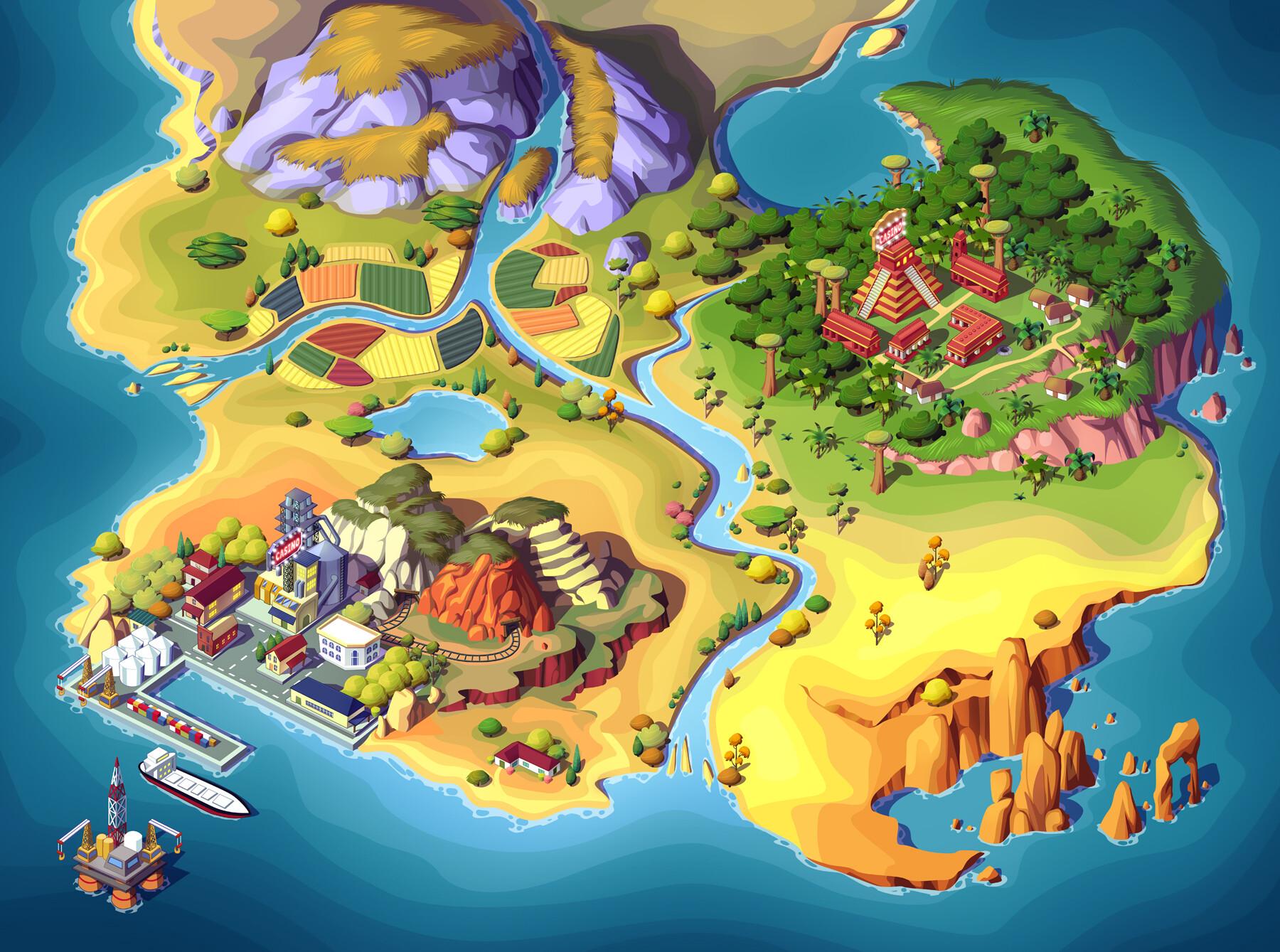
1.4 Boards, Maps & Large Layouts
Boards and maps are the largest visual components. They determine how players navigate the world, track progress, and understand available actions.
Cost drivers include:
- Number of zones and interactive areas
- Environmental detail
- Usability vs visual complexity
- Custom textures and world-building elements
- Alignment with mechanics and gameplay flow
These pieces require both artistic skill and interface design thinking.
1.5 Characters, Creatures & Portraits
Characters often carry a game’s identity. Whether stylized or realistic, they often become the most recognizable part of the brand.
Pricing depends on:
- How many characters you need
- Level of detail (flat color vs full render)
- Unique poses and personalities
- Costume/environment complexity
- Consistency across an entire cast
Characters often set the tone of the whole world, and that takes time to craft.
2. Illustration Complexity Levels (The Real Price Driver)
One of the biggest factors behind board game illustration pricing is complexity , not just how “beautiful” something looks but how much time, decision-making, and technical skill are required.
Here are the four complexity tiers used in professional pipelines:
2.1 Minimalist / Simplified Art
- Clean shapes
- Limited detail
- Symbolic and clarity-focused
- Seen in abstract, family, and light games
Simple doesn’t mean easy, readability is everything.
2.2 Stylized / Semi-Realistic Art
- Modern board game standard
- Gentle shading and stylized designs
- Balances charm and clarity
- Common in games with 50–200 illustrated assets
This is the most practical style for mid-sized games.
2.3 Highly Rendered / Detailed Illustration
- Complex lighting
- Detailed scenes and characters
- Multiple passes and polish
- Often used for Kickstarter hero art
These require significantly more time to produce.
2.4 Epic / Cinematic Illustration
- AAA-level visuals
- Dynamic poses
- Rich environments and effects
- Requires senior artists and many iterations
Used when you want a “premium fantasy cover” look.
Why Complexity Matters
- Determines hours needed
- Influences revision cycles
- Affects team size
- Impacts production timeline
Most games perform best with mid-level stylization — immersive, readable, and scalable.
3. The Board Game Illustration Workflow (From Sketch to Production-Ready)
Most beginners imagine illustration as “draw it and deliver it.”
In reality, a professional board game art pipeline is structured, detailed, and designed to protect the final product.
Here’s what the process looks like in a studio environment:
3.1 Pre-Production (The Foundation)
Before drawing begins, the studio gathers:
- Game theme and tone
- Target audience
- Style direction
- Asset list
- Moodboards & reference
Good pre-production prevents inconsistency and miscommunication.
3.2 Sketches, Thumbnails & Exploration
This stage is crucial.
We explore:
- Composition ideas
- Shape language
- Character poses
- Board layouts
- Icon clarity
Revisions here are cheap, and essential.
3.3 Color & Mood Pass
Defines:
- Light vs dark contrast
- Color palette
- Atmosphere
- Emotional tone
This step sets the game’s visual identity.
3.4 Rendering & Detailing
The most time-intensive stage.
Artists add:
- Textures
- Lighting
- Material definition
- Expressions
- Environmental depth
- Final polish
Even simple assets require disciplined rendering for a polished look.
3.5 Playtest Usability Review
This step is unique to board games.
We check:
- Readability at arm’s length
- Icon clarity
- Gameplay visibility
- Color interference with tokens
- Visual noise
Board game art must be beautiful and functional.
3.6 Final Delivery & Print Preparation
Includes:
- High-resolution exports
- CMYK profiles for print
- Bleeds, margins, safe zones
- Layered source files
- Variations (with/without effects/text)
Good production prep prevents costly misprints.
4. Why Rights, Licensing & Usage Affect the Price
Licensing determines how you can use the artwork.
Pricing depends on:
- Print runs
- Marketing usage
- Merchandise rights
- Promotional rights
- Whether the artist keeps ownership
- Whether you need a full buyout
Common license types:
- Standard rights — use inside the game
- Marketing rights — ads, website, Kickstarter
- Merch rights — posters, shirts, expansions
- Full buyout — complete transfer of rights
Clear licensing builds trust and ensures your game can be promoted properly.
5. How to Reduce Costs Without Reducing Quality
Smart creators optimize costs by:
Choosing a consistent mid-detail style
High realism isn’t always necessary.
Reducing unique illustrations
Templates and variations save money.
Eliminating non-essential assets
Some illustrations look nice but don’t impact gameplay.
Establishing the aesthetic early
Early clarity = fewer revisions = lower total cost.
These adjustments maintain quality while keeping the project manageable.
5.1 Expected Price Ranges
Many studios avoid publishing price ranges, but creators appreciate clarity.
Below are broad, industry-standard ranges to help you budget realistically.
(Actual pricing varies based on complexity, style, volume, and licensing.)
5.2 Card Illustrations
- Simple icons / minimalist art: $25–$60
- Stylized / mid-detail card art: $60–$150
- Fully rendered or thematic cards: $80–$250
5.3 Characters, Creatures & Portraits
- Simple flat color styles: $80–$150
- Mid-detail stylized characters: $150–$350
- Highly rendered or detailed characters: $250–$500+
5.4 Box Cover (The Most Expensive Asset)
- Simple composition: $300–$800
- Stylized or semi-realistic: $800–$1,800
- Premium cinematic / Kickstarter hero covers: $1,500–$3,000+
These ranges help creators understand the industry baseline and build a realistic budget for their project.
6. Final Thoughts: Art That Elevates Your Game
Board game illustration isn’t just decoration, it’s part of the player experience.
Understanding pricing factors gives you control, confidence, and a stronger vision for your game.
A professional studio doesn’t just “draw pictures,” it delivers publication-ready solutions :
- Expert guidance on style and complexity
- Strategic prioritization of assets
- Efficient workflows
- Cohesive visual identity
- Print-ready files with zero production risk
Every board game is unique, and so is every illustration project.
If you want to see how professional board game art can transform your game from concept to shelf-ready product, we’d love to help.
▶ Explore our portfolio: boardgamesart.com
▶ Learn more about our process: boardgamesart.com/game-art
Your world deserves art players will remember long after the final turn.